
Natural cork, plastic or screwcap – do wine enclosures matter? Founder/CEO Jim Bernau of Willamette Valley Vineyards lays out the case for cork in today’s edition of Ask The Expert!
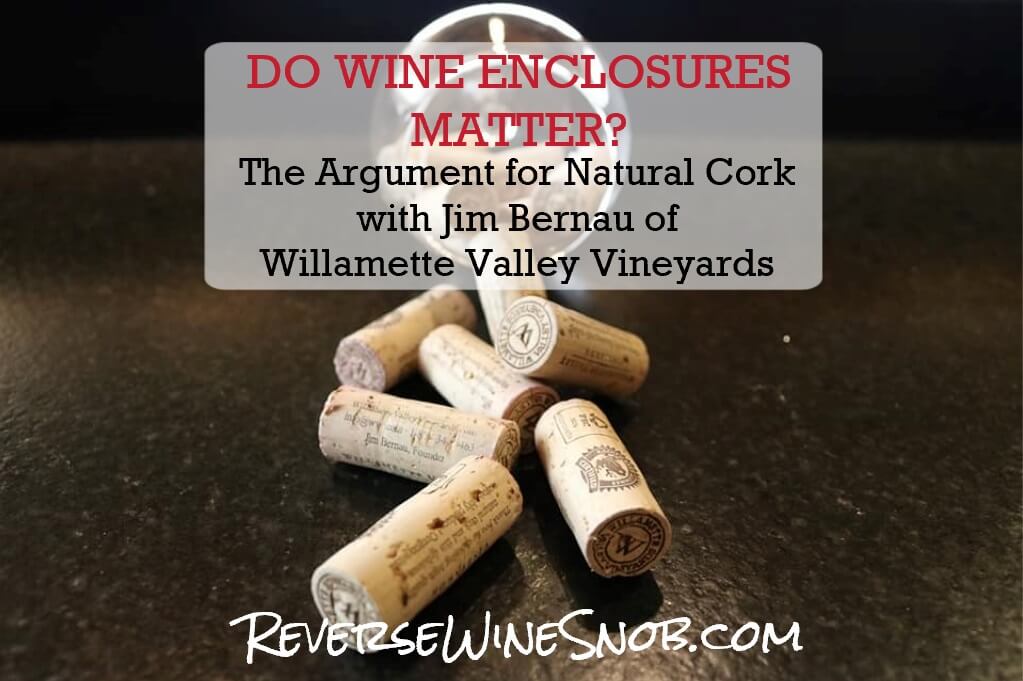
Do Wine Enclosures Matter? The Argument for Natural Cork

Winemakers must weigh the issues of wine quality, cost, consumer convenience and the health of the planet in deciding which type of bottle enclosure to use.
As winemakers face growing internal costs and stiff bottle price competition from more industrial scale producers, many winemakers are turning to unnatural enclosures, cutting their costs in half, choosing plastic or aluminum screw caps.
High quality natural cork, either punched out of the renewable bark of a cork oak tree or the compressed technical versions provide the best wine quality with faster sealing when inserted, avoiding the oxygen slipping past the slower sealing nature of plastic and the aging advantage over aluminum capsules which can lead to anaerobic, off-aromas developing in a screw capped bottle.
Consumers concerned over the endocrine disrupters that can be leached from plastic avoid these enclosures for this reason and the premature oxidation that can occur. Consumers, bartenders and restaurant staff seeking convenience are turning to aluminum screw caps. But should they? The cost savings generally has not been passed along to them by producers.
Would You Like To Save This?
We won't send you spam, unsubscribe at any time.
Using a corkscrew is one of the easiest ways to protect our planet.
The natural cork oak savannas of the Mediterranean and North Africa are among the most important biospheres on the earth, second only to the Amazon. These millions of acres of cork oak trees pull carbon from the air and pump out oxygen. Hundreds of farm communities have tended these trees for hundreds of years harvesting their bark every nine years. These trees and communities are now under the threat of wine producers and consumers turning to unsustainable enclosures.
The World Wildlife Fund has sounded the alarm as these trees are losing their financial caretakers, with many species losing their habitat including the now endangered Iberian Lynx.
Years ago, winemakers had a valid reason to seek alternatives to cork as some corks were poorly processed causing a naturally occurring common, airborne fungi to assemble three chlorine molecules from air pollution settling on cork oak tree bark (but also originating in the cellar from chlorinated water, cleaning supplies, cardboard case boxes, pallets and the like), into 2,4,6-Trichloroanisole (TCA) spoiling the aroma of wine. While this issue is still a problem in some wine cellars, these high quality natural cork producers offer guaranteed TCA-free corks: Amorim, Cork Supply & microagglomerative maker Diam.
We recognize high quality natural corks are double the price and are asking all consumers to support winemakers with their purchases to help them return to the only environmentally sustainable choice.
Thanks again to Founder/Winegrower Jim Bernau of Willamette Valley Vineyards for his answer to the question: Do Wine Enclosures Matter?
Looking for more answers to your burning questions? You can find the full Ask The Expert series here!
Want more great content like this? Sign up for our FREE GUIDE: How To Drink Great Wine Without Breaking The Bank!


